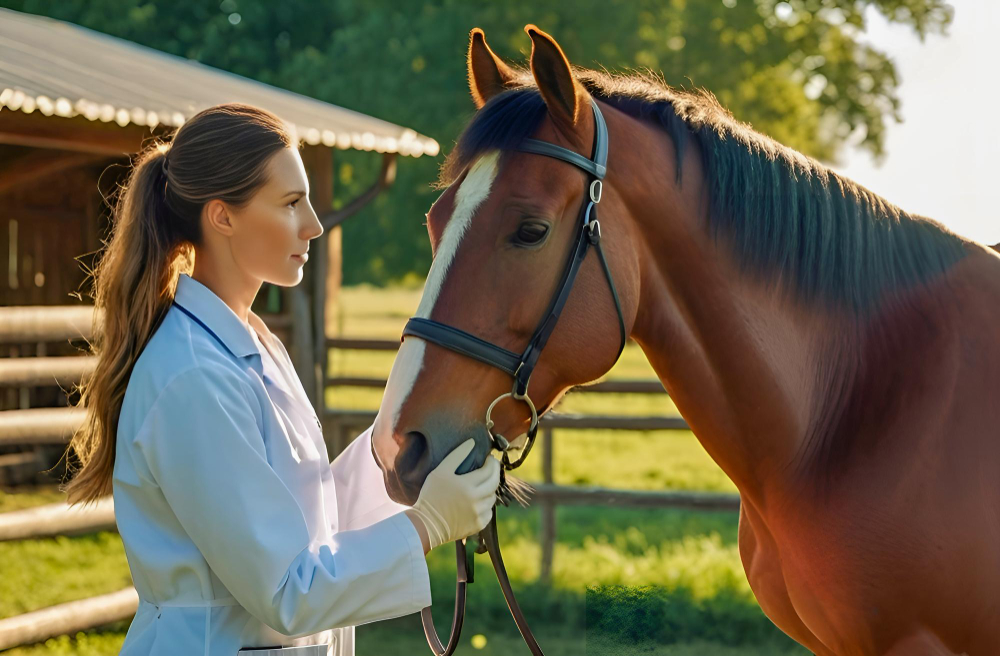
Treat and prevent biotin and vitamin B12 deficiencies in horses by administering targeted oral paste formulations that restore micronutrient reserves. Knowing how to resolve biotin and vitamin B12 shortages stops systemic fatigue, strengthens fragile hoof walls, and restores equine vitality safely. Precise daily feed supplementation guarantees that active restorative compounds reach sensitive tissues without delay. Careful environmental management maintains optimal metabolic balance across commercial stables during changing seasonal routines. Strict adherence to veterinary guidelines secures long-term equine soundness safely.
Stall confinement and poor forage quality subject horse metabolism to severe nutritional stress during intense training schedules. Deficient micronutrient levels cause slow horn growth, cracked hooves, muscle weakness, and debilitating fatigue across performance horses. Standard pasture diets lack sufficient B-complex cofactors, leaving equine cellular systems fragile and prone to developmental failure. Unmanaged deficiency states impair athletic output, halt training programs, and diminish commercial stable value. Standard guesswork fails to resolve hidden cellular weakness during critical performance cycles in modern equestrian facilities. Concentrated pure formulations demand strict adherence to veterinary guidance for safe, effective recovery outcomes.
+--------------------------+---------------------------------+----------------------------------+
| Deficiency Parameter     | Unmanaged Deficient State       | Micronutrient Restored State     |
+--------------------------+---------------------------------+----------------------------------+
| Cellular Energy Output   | Sluggish metabolic pathways     | Vitamin B12 revitalizes red blood|
|                          | cause severe fatigue and lethargy| cell formation and systemic energy|
| Hoof Wall Integrity      | Brittle horn walls split under  | Biotin reinforces keratin bonds  |
|                          | heavy training surface pressure | for crack-proof, resilient hooves|
| Overall Equine Output    | Deficiency stalls racing entries| Consistent soundness preserves   |
|                          | and commercial stable earnings  | commercial stable earnings       |
+--------------------------+---------------------------------+----------------------------------+
Scientific Mechanisms: How Biotin and B12 Revitalize Equine Tissues
Systemic protection of sensitive equine metabolism requires establishing simultaneous moisture regulation, nutritional support, and targeted structural fortification. Essential organic compounds act as efficient metabolic catalysts, strengthening physiological functions against persistent environmental challenge conditions. Promoting active nutrient distribution purifies internal tissues without harming performance horses, breeding stock, or senior equines.
- Assess Deficiency Signs:
Observe daily coat dullness, hoof wall splitting, and persistent fatigue levels to identify micronutrient gaps early. - Calculate Nutrient Dose:
Measure precise daily dietary supplement quantities based on equine body weight and metabolic standards. - Deliver Daily Fortification:
Administer the specialized dual-action vitamin supplement daily to stimulate active cellular regeneration. - Monitor Metabolic Recovery:
Track new hoof growth and energy levels continuously to confirm improved systemic stability.
In addition, balanced nutritional compounds provide essential shielding for delicate internal organ structures. Enhanced cellular efficiency restores normal metabolic function, clearing metabolic waste products from deep dermal formations. Effective stable protection prevents seasonal nutrient drops, preserving domestic equine stock during intense environmental challenge crises. In contrast, unmonitored nutrient gaps cause rapid condition deterioration and structural exhaustion.
Furthermore, targeted supplementation reduces the overall physiological burden on sensitive transition horses. Active racehorses, jumpers, endurance horses, and hard-working equines sustain baseline health despite severe environmental challenge pressures. Healthy horses maintain continuous feed and water intake despite elevated ambient temperatures inside modern barn units. Preventing cellular stress lowers susceptibility to nutritional exhaustion, maximizing overall stable and athletic economic yields. Therefore, precise daily multi-action supplementation delivers essential biological and physical protection.
Impact of Micronutrient Correction on Stable Economics
Budget optimization in commercial equestrian facilities, breeding farms, and training stables depends on selecting comprehensive, multi-functional interventions. Separate synthetic vitamin injections require multiple storage containers, complex veterinary scheduling, and high labor costs per production cycle. Integrated dietary supplement formulations reduce product inventory while delivering identical or superior biological potency. As a result, stable managers maximize financial efficiency without compromising growth rates or equine welfare standards.
- Labor Efficiency: Simple daily oral administration eliminates complex injection bottlenecks and manual labor strain.
- Cost Reduction: Replaces expensive veterinary deficiency treatments with a single natural solution for systemic health.
- Residue Freedom: Guarantees absolute formulation purity, allowing continuous athletic training without withdrawal periods.
- Economic Defense: Protects farm budgets by lowering overall treatment expenditure during peak competition travel seasons.
Moreover, routine commercial protocols require absolute freedom from synthetic chemical contaminants or filler substances. Administering comprehensive multi-action treatments mitigates systemic stress while keeping housing stalls completely clean for daily production. Deficient horses resume active training and movement behaviors faster, maintaining steady daily health gains and high market value.
On the other hand, direct daily supplementation guarantees immediate, uninterrupted active compound delivery across diverse horses. Active horses consume fortified feeds continuously throughout morning hours despite heavy athletic demands. Natural compound action halts structural decline before irreversible deficiency occurs. Uninterrupted nutritional support maintains tissue strength, reducing financial losses from poor feed conversion ratios.
Advanced Micronutrient Care with Piotin 12
Horse owners, farriers, and veterinary practitioners require reliable, high-purity formulations to eliminate vitamin deficiencies and restore elite equine vitality. Managing horses that suffer from extreme fatigue and brittle tissues presents severe handling obstacles across stables worldwide. Caregivers choose concentrated dietary supplements designed for practical handling and rapid biological action.
Piotin 12 directly addresses the symptoms of essential vitamin shortages, such as fatigue and tissue weakness, acting as a direct treatment and preventive measure to effectively replenish deficits and secure required nutrition levels. The product is introduced as an advanced dietary solution that supplies high-potency biotin combined with vitamin B12, fueling metabolic repair pathways and promoting rapid growth of tough, resilient horn tissue while restoring systemic stamina.
On the other hand, using this balanced nutritional formula neutralizes environmental threats and restores physiological efficiency safely. Essential active ingredients support structural defense, energy production, and systemic stamina during heavy training cycles. The specialized supplement mixes smoothly into daily rations or administers easily as an oral paste without causing feed rejection. Consequently, stables receive high-density multi-action defense, restoring horse mobility, athletic soundness, and physical vitality quickly.
- Targeted Deficiency Treatment: Formulated specifically to treat and prevent biotin and vitamin B12 deficiencies in horses.
- Dual-Action Restorative Power: Combines high-potency biotin for hooves and vitamin B12 for energy and tissue repair.
- Seamless Feed Integration: Mixes easily into daily rations or applies directly to eliminate deficiency symptoms.
- Residue-Free Control: Protects product purity and maintains continuous safe racing standards.
Field Application Protocols for Equine Metabolic Health
Flawless administration protocols ensure maximum biological returns from nutritional supplement investments. Stable managers evaluate ambient barn temperatures before applying concentrated feed supplements or environmental management strategies. Calculating precise dosage volumes prevents underperforming compound dispersion during morning hours. Fresh seasonal batch application preserves sensitive active compounds against rapid environmental oxidation.
At the same time, stable hygiene governs moisture balance among indoor equine housing units. Wet bedding conditions soften the sole, while excessively dry stalls cause wall splitting. Adjusting stall cleaning routines keeps bedding clean and balanced, encouraging steady health conditions throughout warm hours. Proper environment management absorbs excess humidity, providing direct physiological regulation for performance horses.
- Seasonal Application: Apply organic treatments strictly during peak training blocks, deficiency phases, and changing environmental windows.
- Facility Shielding: Protect housing stalls from damp bedding and heavy ammonia to preserve optimal metabolic balance.
- Equine Tracking: Track post-workout movement and energy behavior continuously to detect nutritional deficiencies early.
- Water and Feed Sanitation: Clean drinking troughs and feeding tubs after concluding multi-day fortification programs.
As a result, disciplined management secures consistent animal vitality and high performance scores daily. Active racehorses maintain active feeding drives, strong immune responses, and optimal movement behaviors. Nutritional fatigue and poor hoof quality vanish, preserving commercial farm profit margins. Finally, daily attention to nutritional protocols proves learning how to treat biotin and vitamin B12 deficiencies ensures sustained commercial success.
References and Documented Research
References
- National Research Council. (2007). Nutrient Requirements of Horses, Sixth Revised Edition. National Academies Press. Equine Vitamin Requirements, Biotin Nutrition, Vitamin B12, Nutritional Deficiencies, and Dietary Supplementation.
https://doi.org/10.17226/11653 - Combs, G. F., Jr., & McClung, J. P. (2017). The Vitamins: Fundamental Aspects in Nutrition and Health, Fifth Edition. Academic Press. Biotin and Vitamin B12 Metabolism, Deficiency Mechanisms, Coenzyme Functions, and Nutritional Management.
https://www.sciencedirect.com/book/9780128029657/the-vitamins - Geor, R. J., Harris, P. A., & Coenen, M. (Eds.). (2013). Equine Applied and Clinical Nutrition: Health, Welfare and Performance. Elsevier. Equine Nutritional Assessment, Vitamin Deficiency, Dietary Management, and Performance Horse Health.
https://www.sciencedirect.com/book/9780702034220/equine-applied-and-clinical-nutrition - Reilly, J. D., Cottrell, D. F., Martin, R. J., & Cuddeford, D. (1998). Effect of Supplementary Dietary Biotin on Hoof Growth and Hoof Growth Rate in Ponies: A Controlled Trial. Equine Veterinary Journal, Supplement 26, 51–57. Dietary Biotin Supplementation, Hoof Horn Growth, and Equine Hoof Health.
- Stabler, S. P. (2013). Vitamin B12 Deficiency. New England Journal of Medicine, 368(2), 149–160. Cobalamin Deficiency, Hematological Manifestations, Metabolic Effects, and Clinical Assessment; Human Clinical Evidence.
https://doi.org/10.1056/NEJMcp1113996 - O’Leary, F., & Samman, S. (2010). Vitamin B12 in Health and Disease. Nutrients, 2(3), 299–316. Vitamin B12 Metabolism, Deficiency, Red Blood Cell Formation, and Nutritional Health.
https://doi.org/10.3390/nu2030299 - National Research Council. (1987). Vitamin Tolerance of Animals. National Academies Press. Vitamin Supplementation, Nutritional Safety, and Tolerance Considerations.
https://doi.org/10.17226/949 - MOVETCO. Piotin 12. Manufacturer’s Product Information, Biotin and Vitamin B12 Composition, Dietary Supplement Formulation, Intended Species, Recommended Dosage, Administration Instructions, and Precautions.
https://movetco.com/product/piotin-12/